Waist Circumference
A simple measure of abdominal fat — and one of the best signals of cardiometabolic risk we have, even when BMI looks normal.
What is waist circumference?
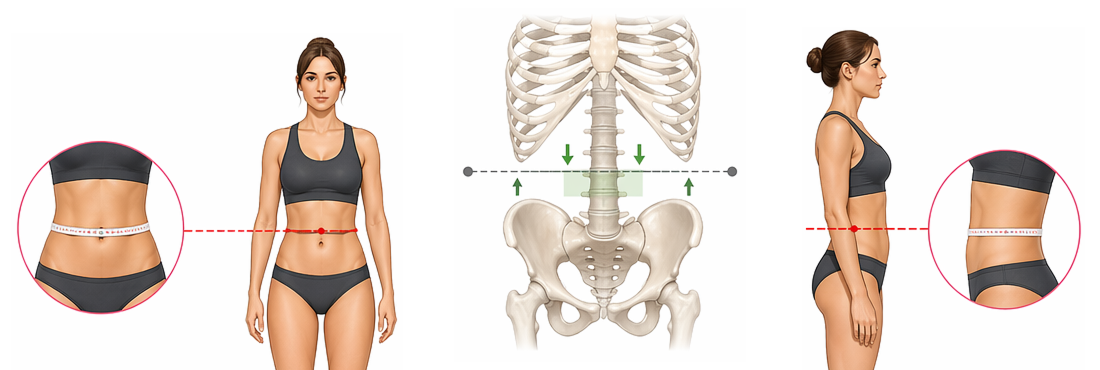
Waist circumference (WC) is a simple anthropometric measurement that quantifies . It is widely used in clinical practice to estimate central (visceral) adiposity, which is more strongly associated with than overall body weight or BMI alone.
Why it matters
Waist circumference reflects abdominal fat distribution, particularly . It correlates with and cardiometabolic risk: type 2 diabetes, hypertension, and atherosclerosis.
For a sex-adjusted view of fat distribution, pair this with the waist-to-hip ratio.
Limitations
Waist circumference does not differentiate (high risk) from (lower risk). Two individuals with the same measurement may have different metabolic risk profiles.
It is sensitive to posture and breathing, and is not reliable in very obese individuals, during pregnancy, or in patients with abdominal conditions such as or .
FAQ
Waist circumference reflects abdominal (visceral) fat, which is more strongly associated with cardiometabolic risk than total body weight. A person can have a normal BMI but a high waist circumference and still be at increased risk of type 2 diabetes and cardiovascular disease.
Waist circumference is a reliable and practical screening tool, but it has limitations. It does not distinguish between fat types and may be influenced by measurement technique or certain conditions. It should be interpreted alongside BMI and metabolic markers.
No. Waist circumference should not be used during pregnancy because abdominal size changes due to fetal growth, fluid accumulation, and normal physiological adaptations rather than fat distribution alone.
Yes. Conditions such as ascites, abdominal masses, large cysts, or organ enlargement can increase abdominal girth independently of body fat. In these situations, waist circumference may overestimate adiposity and should be interpreted with caution.
Visceral abdominal fat is metabolically active and produces inflammatory and hormonal signals linked to type 2 diabetes, cardiovascular disease, and metabolic dysfunction.
- Ross R, Neeland IJ, Yamashita S, Shai I, Seidell J, Magni P, Santos RD, Arsenault B, et al. Waist circumference as a vital sign in clinical practice: a Consensus Statement from the IAS and ICCR Working Group on Visceral Obesity.
- Ostchega Y, Seu R, Sarafrazi Isfahani N, Zhang G, Hughes JP, Miller I. Waist circumference measurement methodology study: National Health and Nutrition Examination Survey, 2016. National Center for Health Statistics. Vital Health Stat 2(182). 2019.
- Contardo Ayala AM, Nijpels G, Lakerveld J. Validity of self-measured waist circumference in adults at risk of type 2 diabetes and cardiovascular disease. BMC Med 12:170. 2014.
- Poirier P, Després J-P. Waist circumference, visceral obesity, and cardiovascular risk. J Cardiopulm Rehabil. 2003;23:161–169. doi:10.1097/00008483-200305000-00001.
Waist circumference is a screening tool, not a diagnostic test. Talk to your clinician for a personalized assessment.